
Couples With Different Travel Styles: How to Plan a Trip You’ll Both Love

Updated: Aug 17
You can love the same person for decades and still have completely different ideas of a perfect vacation.
One of you is reading about private museum tours, historic neighborhoods, and the best time to visit the cathedral before the crowds arrive. The other is looking at the resort pool, the golf course, and the phrase “late checkout” with deep emotional attachment.
Sound familiar?
Maybe one of you wants to be out the door by 8:00 a.m. with comfortable shoes and a plan. The other wants coffee on the terrace, no alarm, and a morning that unfolds gently. One likes reservations, tickets, drivers, and a schedule. The other hears “schedule” and thinks, “I thought we were getting away from all that.”
This is one of the most common travel realities for couples with different travel styles, especially after years of juggling work, family, and busy lives. By the time you are planning premium trips in your 50s and 60s, you know what you like. And that is a good thing.
The trick is not forcing one person’s vacation onto the other. A great trip does not require two people to travel the same way. It needs to make room for both of them.
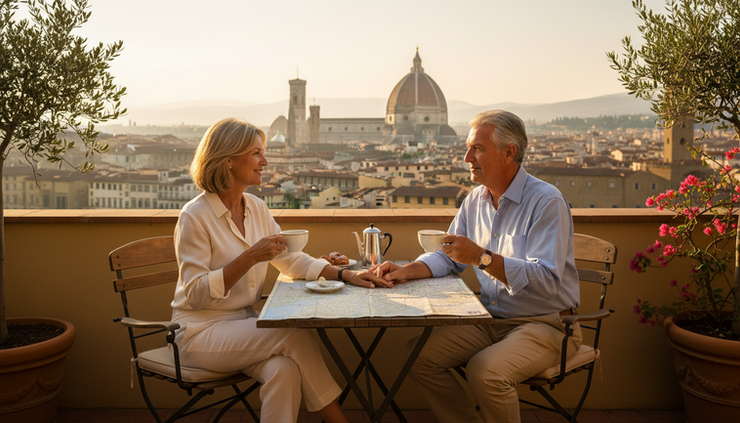
The real issue is not the pool or the museum
On the surface, it looks like a simple disagreement.
Museum or pool. Golf or walking tour. Early dinner or late jazz set. Full itinerary or “let’s see how we feel.”
But underneath that, most couples are really talking about energy, pace, curiosity, rest, and freedom.
One person may feel most alive when they are learning something new. They want context. They want stories. They want to stand in front of a painting, a ruin, or a beautiful building and understand why it matters.
The other person may feel most restored when there is space. No rushing. No lines. No pressure to appreciate every important thing within a 20-mile radius.
Neither person is wrong. They are just trying to get something different from the same trip.
And after a certain point in life, that matters. You are not traveling just to check off a destination. You are traveling because time feels valuable. You want the trip to be worth it. You want it to feel good while you are there, not only when you look back at the photos.
That is why couples vacation planning can get surprisingly emotional. It is not really about whether Tuesday morning should include a palace tour. It is about feeling heard.
Stop treating compromise like everyone loses
A lot of couples hear the word “compromise” and immediately picture a watered-down vacation.
One person gets half a museum. The other gets half a pool day. Nobody is thrilled, but everyone is supposed to be mature about it.
That is not the kind of compromise we are talking about.
Good travel planning for two people is less about cutting everything in half and more about designing the trip with different kinds of pleasure built in.
Here is a simple way to think about it.
One person may want depth, discovery, and a real sense of place, while the other wants ease, comfort, and time to exhale. One loves structure. The other loves freedom.
So build in the private tour and a few memorable cultural experiences, but also choose a beautiful hotel where a slower morning or a quiet afternoon feels just as worthwhile. Plan the reservations and experiences that matter, then leave some space where absolutely nothing is planned.
Now the trip has shape, but it also has breathing room.
Maybe you both do the private food tour in Lisbon because it sounds fun for everyone. The next morning, one of you visits the tile museum with a guide while the other sleeps in, works out, and has a long breakfast. You meet afterward for lunch at a seaside restaurant, both happier than if one person had dragged the other through a morning they secretly resented.
That is not “separate vacations.” That is wise pacing.
Not every moment has to be shared
This one can feel a little strange at first, especially for couples who think a vacation should mean doing everything together.
But truly, not every hour needs to be a duet.
There is something lovely about each person having one or two experiences that are just theirs. One goes golfing at a beautiful course. The other takes a cooking class, visits a museum, or wanders through a historic market with a local guide. Later, you meet for drinks and actually have something to talk about besides whether your feet hurt.
A little independence can make the shared time better.
This is especially true when traveling with a partner who has different interests. If one person spends the whole afternoon pretending to enjoy ancient pottery, nobody wins. If the other spends four hours sitting at a pool feeling guilty for not being “productive,” that is not rest. That is poolside obligation, which is not a thing anyone needs.
The key is to plan separate time with intention, not as an afterthought.
Choose a few experiences you genuinely want to share, and then give each other room for one or two things you’d rather do on your own. Decide when you’ll meet back up, and make that part of the day something to look forward to: maybe lunch, a glass of wine, sunset, or a great dinner.
It is amazing what a difference this makes.

Build the day around energy, not just activities
One of the most overlooked parts of how to plan a trip both partners will enjoy is energy.
Not interests. Not budget. Not hotel category. Energy.
Some people wake up ready to conquer Rome. Others wake up ready to consider breakfast as a major event. Some can tour for six hours and still want dinner at 8:30. Others are cheerful until about 3:00, then become suspiciously quiet.
You probably know which one you are.
A good itinerary respects that. It does not pretend you are both the same person in different sunglasses.
For many couples, the sweet spot is a rhythm like this:
Start with a purposeful morning. Do the things that need timing, maybe a private guide, museum entry, historic site, boat transfer, or market visit.
Then slow things down in the afternoon. Leave space for the pool, spa, a nap, golf, shopping, reading, or nothing at all. Nothing is a highly underrated vacation activity.
And come back together in the evening for a beautiful dinner, a scenic walk, a concert, or a drink somewhere with a view.
This kind of rhythm works because it gives the planner something to look forward to and gives the relaxer a light at the end of the sightseeing tunnel.
It also prevents the classic vacation debate at 4:00 p.m., when one person says, “We still have three churches and a fortress,” and the other is already mentally in a robe.
Choose places that naturally support both styles
Some destinations make it easier for couples with different interests to travel well together.
A city-only itinerary can be wonderful for the culture lover, but it may wear out someone who wants calm. A remote beach resort can be heaven for the person who wants rest, but it may leave the curious traveler wondering if there is anything to do besides adjust the umbrella.
The best vacation ideas for couples with different interests often combine both.
Think of places where sightseeing and relaxation naturally live close together. The Amalfi Coast gives you boat days, gardens, ruins, coastal drives, and long lunches. Provence combines markets, Roman sites, wine estates, countryside hotels, and beautiful villages. Scotland works beautifully when one person loves golf and the other wants castles, scenic drives, and charming towns. Portugal offers historic cities, beaches, wonderful food, and plenty of opportunities to slow down. And Greece can easily combine archaeology and exploring with sailing, island time, and relaxed evenings by the water.
You do not need to split the trip exactly down the middle. You just need enough variety that both people can say, “Yes, this feels like my kind of vacation too.”
The right hotel choice can make a huge difference too. If the hotel itself is a pleasure, the person who wants downtime can genuinely enjoy staying behind while the other goes exploring. And if there are interesting experiences nearby, the curious traveler doesn't feel stuck in a beautiful place with nothing to do.
That balance is everything.

Talk about the trip before the trip starts
This sounds obvious, but many couples skip it.
They talk about the destination. They talk about flights. They talk about dates. Then they assume they are imagining the same vacation.
They are not.
One person is picturing three guided tours, two tasting menus, and one very meaningful cathedral. The other is picturing sleeping past 8:30, reading by the pool, and having no one ask, “Are you ready?” before they have finished coffee.
Before anything gets booked, have the real conversation.
Not a tense one. Not a courtroom trial about who ruined the last vacation. Just a calm, honest chat.
Talk about what would make the trip feel wonderful to each of you, but also what you absolutely don't want to do every day. How many planned activities sound exciting before they start feeling tiring? Do you want downtime in the morning, afternoon, or both? What's one experience you really want to share? And what's one thing you'd actually enjoy doing on your own?
These questions can save a trip.
They also make planning feel less like one person is “in charge” and the other is along for the ride. That dynamic can create friction, even when nobody means for it to happen.
The best planning conversations are not about winning. They are about discovering what each person needs to come home happy.
Give the planner and the free spirit both a role
Most couples have one person who naturally plans. They research hotels, compare rooms, read restaurant menus, check ferry times, and somehow know whether the museum is closed on Mondays.
The other person may be perfectly capable, but they are less interested in the details. They may say, “Whatever you think,” which sounds easy until later, when “whatever” apparently did not include a three-hour walking tour in the sun.
So give both people a role.
The planner can shape the framework with the flights, hotels, transfers, key reservations, and must-do experiences.
The more spontaneous partner can choose from a few open options during the trip. Maybe which afternoon to relax, which casual lunch spot to try, or whether the day calls for a boat ride or a long nap.
This works because it gives structure without making the whole trip feel locked down.
And please, if you are the planner, resist the urge to fill every blank space. Blank space is not a planning failure. Sometimes it is the part of the trip your partner will love most.
Make “together time” count
When you are not doing everything together, the shared moments matter even more.
This is where a trip can feel really special.
Choose a few experiences that feel good for both of you, even if they are not anyone’s top hobby. A private sunset cruise. A long lunch at a vineyard. A scenic train ride. A chef-led market visit. A quiet dinner where nobody is checking the time.
These are the moments that become the story of the trip.
Not because they were the most famous sights or the fanciest settings, but because you both felt present.
A couple does not need identical interests to have a beautiful travel life. What you need is a little mutual generosity and a plan that does not turn one person into the permanent tour guide and the other into the reluctant passenger.
And yes, sometimes you need separate mornings.
That is romance too, in its own very practical way.

The Best Trip for Couples With Different Travel Styles
Different travel styles in relationships are not a problem to fix. They are just information.
One of you may always light up at the idea of a guided museum visit. The other may always prefer a slow morning, a beautiful pool, and a very serious relationship with a lounge chair. That does not mean you are incompatible travelers. It means the trip needs to be built with both truths in mind.
Plan some things. Leave some space. Share the moments that matter. Split up when it makes sense. Come back together with stories, appetite, and maybe a little more patience than you had at breakfast.
A great vacation does not ask either person to disappear into the other person’s preferences.
It simply says, “There is room for you here too.”
Planning a Trip That Works for Both of You
I believe the best trips begin with understanding the people taking them, how they like to travel, what they enjoy, and what matters to them. Sometimes that means finding the right balance between two very different travel styles.
If you’re thinking about your next journey and want help creating something that works for both of you, I’d love to hear from you.
Not quite ready? Explore Lux Grand Travels


Comments